
Welding and Metal Service
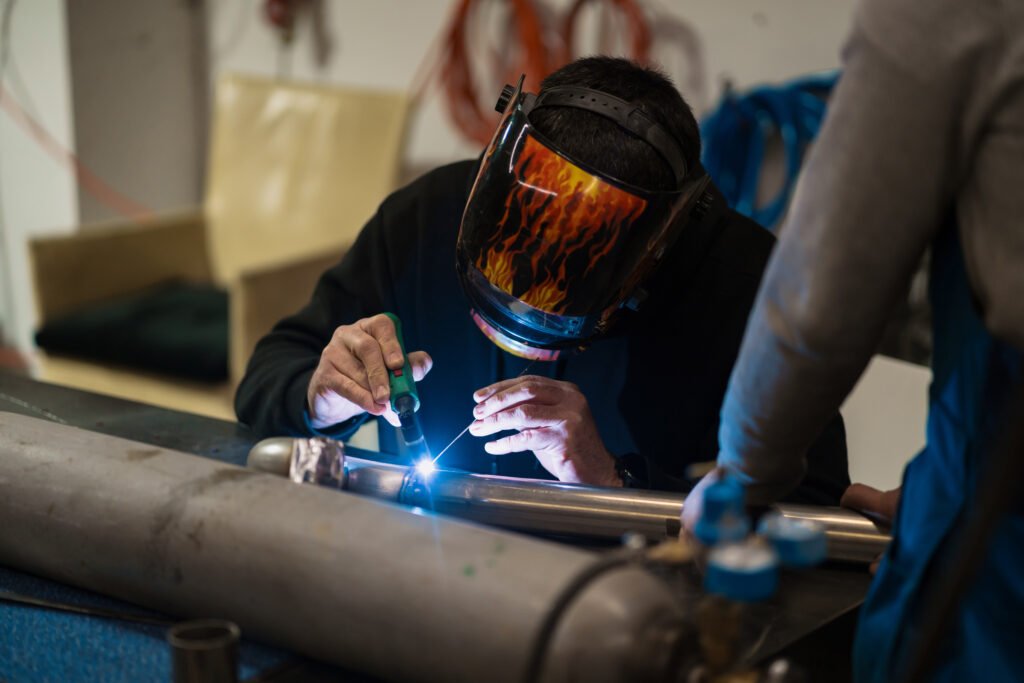
Welding is a critical process in the world of manufacturing, construction, and repair work, representing a fusion of science, engineering, craftsmanship, and technology that dates back thousands of years, evolving significantly from the early forge welding techniques of ancient blacksmiths to the highly advanced and specialized procedures utilized in today’s aerospace, automotive, and shipbuilding industries. At its core, welding is a fabrication process that joins materials, typically metals or thermoplastics, by causing coalescence, usually through high heat and sometimes with the application of pressure or by the use of filler material. The origins of welding can be traced to the Bronze Age, where pressure and heat were used to bond pieces of metal, but it wasn’t until the 19th century that modern welding processes began to take shape.
Modern Welding Company
Customer Fabrication
We Know Metal
High Quality Work
Welding Work – A Comprehensive Overview
Welding is a fabrication process that joins materials, usually metals or thermoplastics, by causing coalescence. It typically involves melting the base materials and adding a filler material to form a strong joint upon cooling. There are various types of welding processes, including MIG, TIG, Stick (SMAW), Flux-Cored Arc Welding, and more. MIG welding (Metal Inert Gas) is known for its speed and ease of use, making it suitable for beginners and mass production. TIG welding (Tungsten Inert Gas) provides precision and is commonly used for thinner materials and aerospace components. Stick welding, also known as Shielded Metal Arc Welding (SMAW), is widely used for construction and heavy-duty repair. Each welding method has distinct advantages and is chosen based on the project requirements. The key components of welding equipment include the power source, electrode, filler material, shielding gas, and protective gear. Safety is paramount in welding due to the risks of burns, electric shock, fumes, and eye damage. Proper ventilation is essential to avoid inhaling harmful fumes and gases. Welders must wear protective gear including helmets, gloves, aprons, and boots. The quality of a weld depends on factors such as current, voltage, travel speed, and technique. Skilled welders develop a steady hand and a good eye for maintaining consistent bead patterns. Welding can be performed manually, semi-automatically, or fully automatically using robotic systems. Automation in welding increases precision, repeatability, and efficiency, especially in industries like automotive and shipbuilding.